


Market Overview
The market has become increasingly divided over the past several weeks. Many of the technology and AI-related stocks that led the market higher earlier this year have come under significant selling pressure. At the same time, money has been rotating into areas that had previously lagged, including financials, healthcare, energy, utilities, and other value-oriented stocks.
This rotation has created an unusual environment in which the major indexes have struggled even as the performance of the average stock has improved. We view this broader participation as encouraging, but weakness among the market's former leaders remains a reason for caution.
For now, we continue to focus on the areas showing the best relative strength while closely watching several important market levels. The coming weeks should provide greater clarity as to whether the current rotation develops into a healthier, more broadly based market advance or whether weakness in technology eventually spreads to the rest of the market.
S&P 500 and Market Breadth
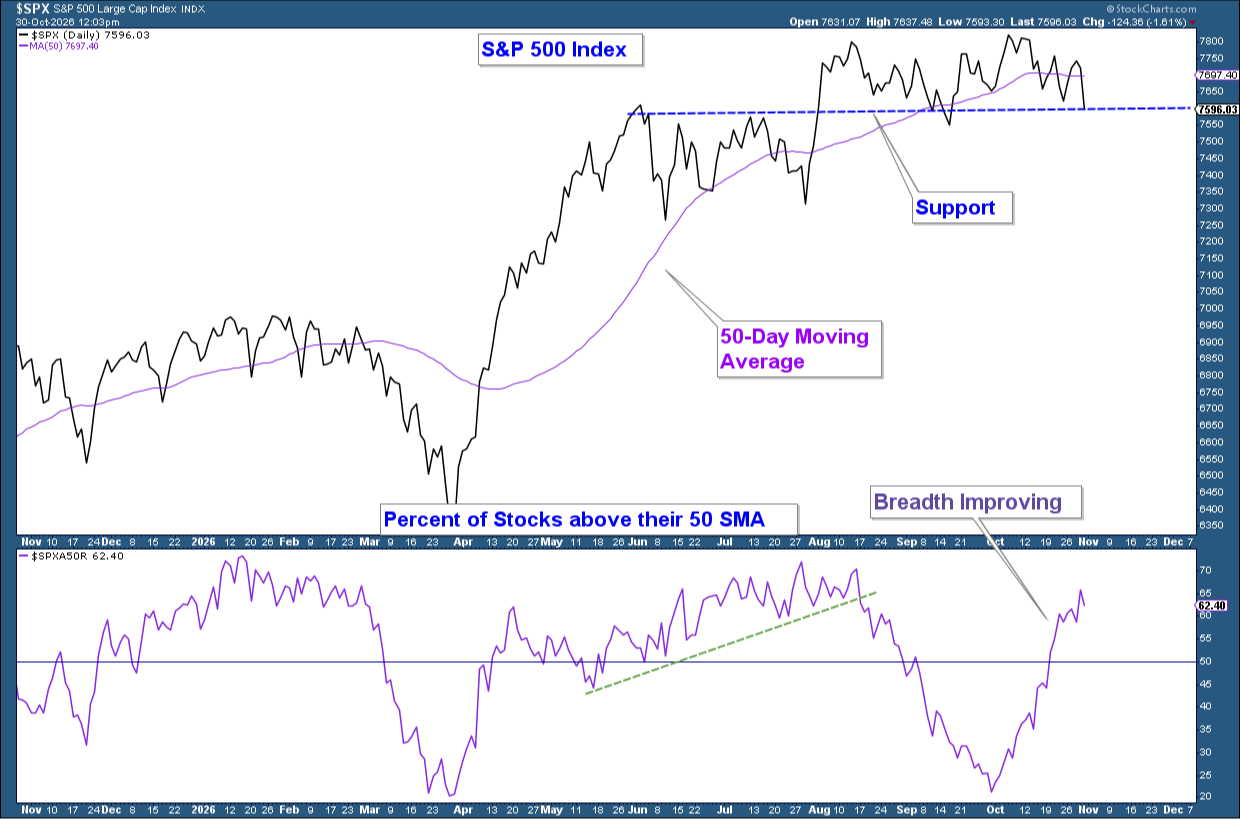
The S&P 500 has pulled back over the past several weeks and is now testing an important area of support near its prior highs. A break below this level would be a sign of further weakness and could increase the risk of a deeper market correction.
There is, however, an encouraging development beneath the surface. The lower portion of the chart shows the percentage of S&P 500 stocks trading above their 50-day moving average. While the S&P 500 has declined, this measure has risen sharply from about 22% in early October to more than 60% today.
This tells us that the recent weakness has been concentrated in some of the market's largest growth and technology stocks, while a growing number of stocks are actually improving. Money has been rotating into areas such as financials, healthcare, energy, utilities, and other value-oriented stocks. This improving market breadth is a positive sign, even as the S&P 500 remains near an important support level.
Semiconductor Stocks Test Major Support
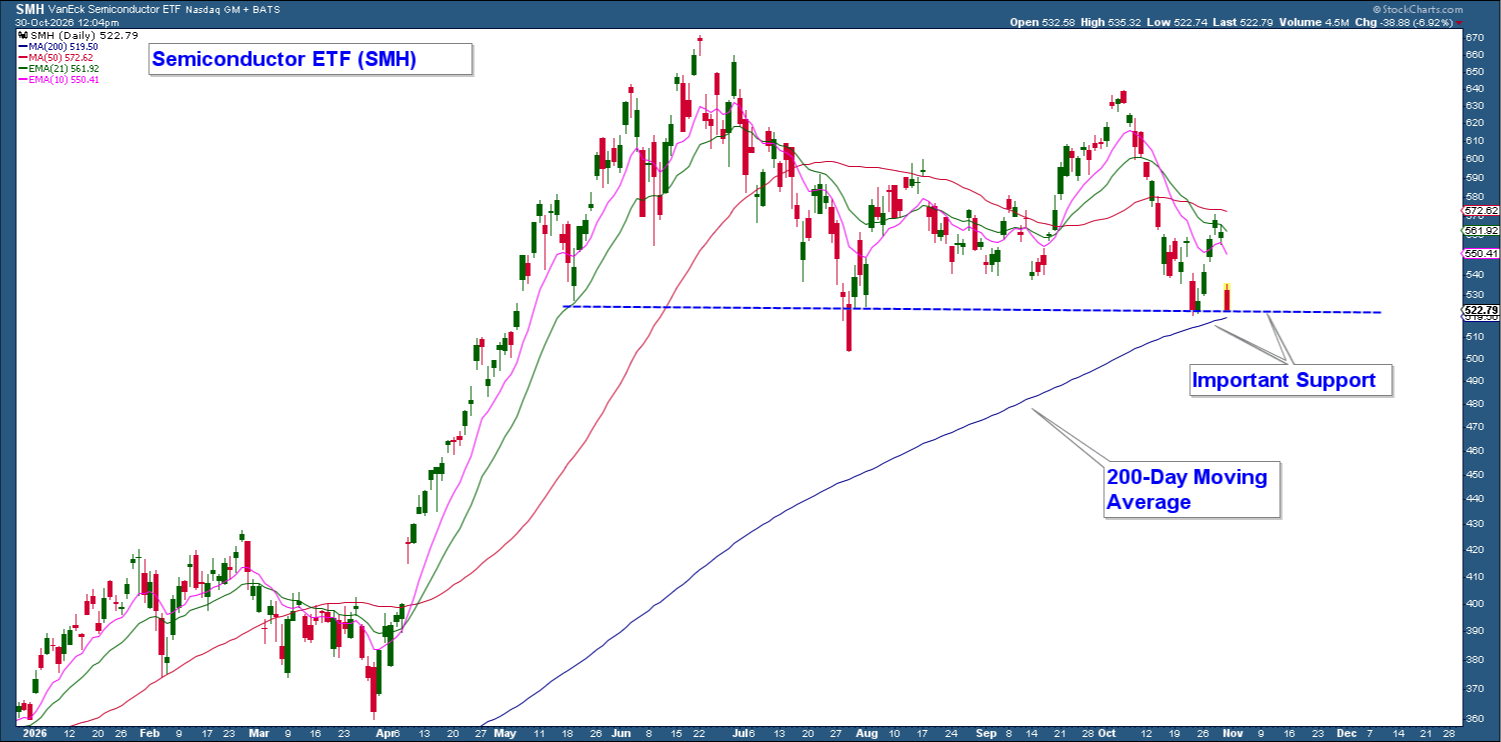
While market breadth has been improving, technology and other growth-oriented areas of the market remain weak. This is particularly evident in semiconductor stocks, which had previously been among the market's strongest performers.
The chart below shows the VanEck Semiconductor ETF (SMH), which has fallen sharply from its recent high and is now trading near an important area of support. This level coincides with previous lows and the 200-day moving average, a widely followed measure of a stock or index's longer-term trend.
What happens from here will be important. A rebound from this area would be an encouraging sign that the weakness in technology may be stabilizing. A decisive break below support, however, would suggest that the correction in this important area of the market may have further to go.
For now, we continue to favor areas of the market showing better relative strength while remaining cautious toward growth and technology stocks.
Bond Yields Begin to Decline
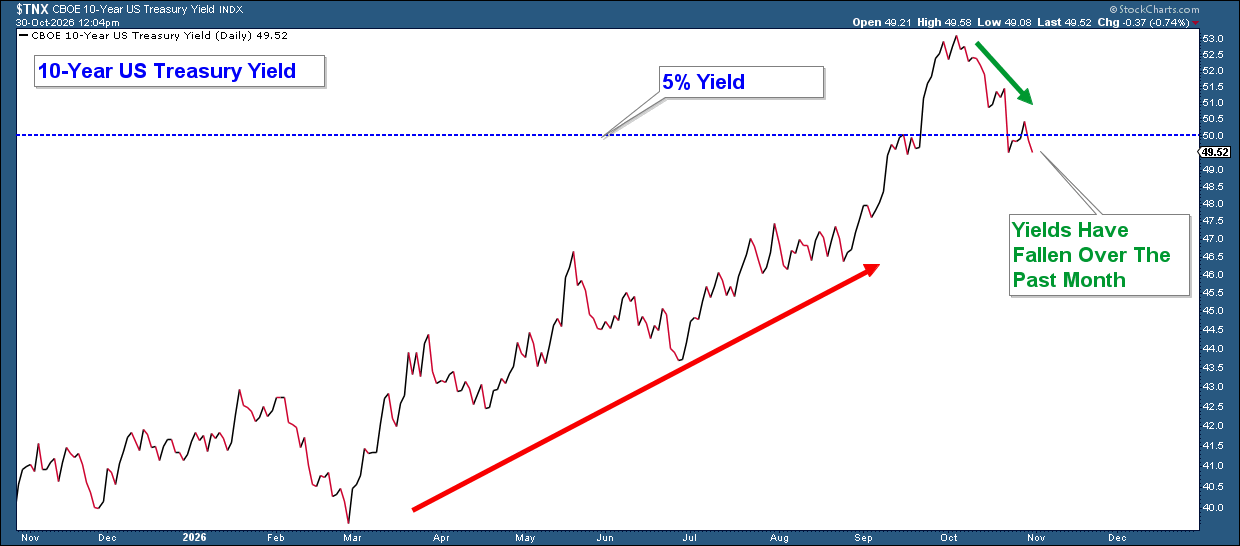
One positive development over the past month has been a decline in longer-term interest rates. The 10-year U.S. Treasury yield, shown below, recently climbed above 5.25% before reversing course and falling back below 5%.
Higher interest rates have been a strong headwind for both stocks and bonds. The recent decline in yields has eased some of that pressure.
It is encouraging to see yields moving lower, but we are not viewing this as an all-clear signal for the stock market. Growth and technology stocks have remained weak despite the decline in rates, reinforcing our view that the current market weakness is more about a change in leadership than interest rates alone.
Client Account Update
As market leadership has changed, we have continued to adjust client portfolios toward the areas showing the strongest relative performance. Over the past month, we have maintained significant exposure to value and more defensive areas of the market, including energy, healthcare, financials, and utilities. We have also increased exposure to the broader market through value and equal-weight strategies, which have benefited as market participation has improved.
Our exposure to technology and other growth-oriented areas remains limited as we wait for evidence that conditions in these areas are improving.
More conservative accounts continue to hold a significant allocation to bond funds, which have continued to perform well.
We will continue to follow the market's changing leadership rather than trying to anticipate when the previous leaders will recover. If conditions change, we will adjust accordingly.